

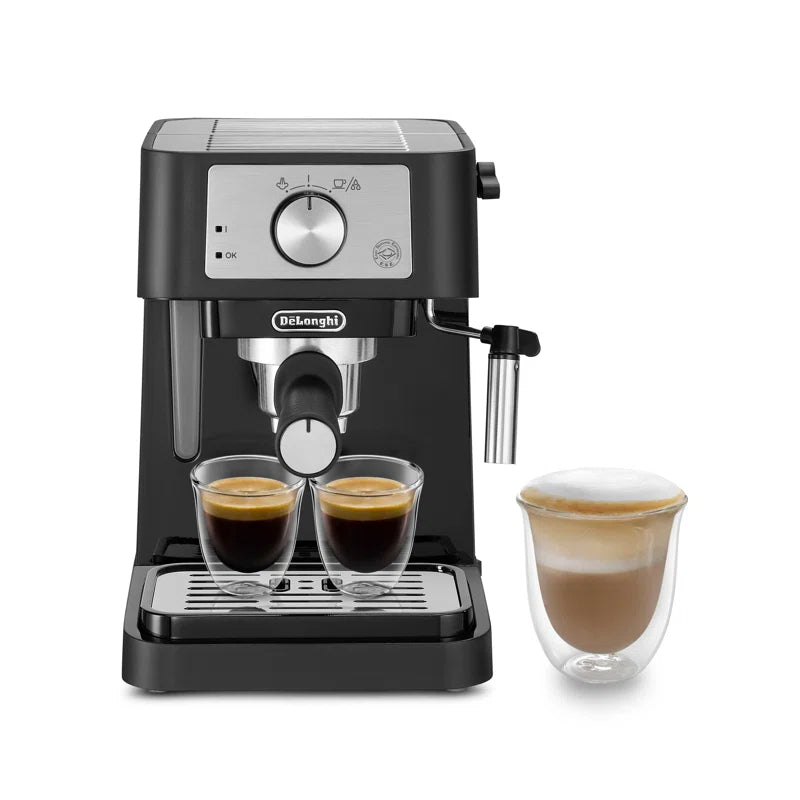
The De'Longhi EC50 and Stilosa are both entry-level 15-bar manual espresso machines built around the same core design — pressurized portafilter baskets, a manual steam wand, and a 1-liter removable water tank. Both are excellent starting points for home espresso without a steep learning curve. This guide covers everything for both models: first use setup, brewing steps, milk frothing, E.S.E. pod compatibility, cleaning, and fixes for the most common issues.
View De'Longhi espresso machines at Altohaus →
What's in the Box
Both models include:
- Espresso machine body
- Removable water tank (1L / 34 oz)
- Portafilter with 51mm basket
- Single cup filter (1-cup)
- Double cup filter (2-cup)
- E.S.E. pod filter (compatible with standard E.S.E. pods)
- Coffee scoop and tamper
- Removable drip tray
- Instruction manual
Key Specifications
| Specification | EC50 | Stilosa |
|---|---|---|
| Pump pressure | 15 bar | 15 bar |
| Boiler | Stainless steel thermoblock | Stainless steel boiler |
| Water tank | 1L removable | 1L removable |
| Portafilter | 51mm pressurized | 51mm pressurized |
| E.S.E. pod compatible | Yes | Yes |
| Steam wand | Panarello/dual frother wand | Manual steam wand |
| Cup warmer | Yes — top plate | Yes — top plate |
| Drip tray | Removable, fits glasses up to 110mm | Removable, fits glasses up to 110mm |
| Anti-drip | Yes | Yes |
| Warranty | 2-year manufacturer warranty (De'Longhi US) | |
| Support | support.delonghi.com / 1-800-322-3848 | |
EC50 vs Stilosa: Key Differences
Both machines share the same brewing platform, but there are a few practical differences worth knowing:
- Steam wand: The EC50 uses a Panarello-style dual frother wand (automatic air intake for easier frothing). The Stilosa has a traditional manual steam wand that gives you more control with a slightly steeper learning curve.
- Design: The Stilosa has a more refined, contemporary aesthetic with stainless steel accents. The EC50 is more utilitarian.
- Pressure system: Both use pressurized portafilter baskets, which make them forgiving of grind inconsistencies — a major advantage for beginners.
For everything else in this guide — setup, brewing, cleaning, troubleshooting — both models follow the same process.
First Use: Setting Up Your Machine
Before your first espresso, rinse the machine through to remove manufacturing residue and prime the system.
- Fill the water tank to the MAX line with fresh, cold water. Insert it firmly into its housing until it clicks or seats securely.
- Plug in the machine and switch on the main power. Allow it to heat up — the indicator light will signal when it's ready (solid, not flashing).
- Preheat the portafilter: insert it without coffee grounds, place a large cup underneath, and run a brew cycle. This flushes residue and brings the portafilter to temperature. Discard the water.
- Repeat 2–3 times until water runs cleanly and the machine sounds smooth.
- Preheat your cups — place them on the cup warmer plate on top of the machine, or rinse them with hot water from the flush cycle. Cold cups significantly reduce extraction temperature.
How to Brew Espresso
- Power on and wait for the ready indicator.
- Select your filter: 1-cup filter for a single shot (~7g coffee), 2-cup filter for a double (~14g). For E.S.E. pods, use the pod filter.
- Dose and tamp: add one level scoop (~7g) for single, two scoops (~14g) for double. Tamp firmly and evenly with the included tamper.
- Lock the portafilter into the group head by inserting and turning firmly to the right until it locks in place.
- Place your cup under the spout. Remove the drip tray to accommodate taller glasses if needed.
- Press the brew button — single or double. The machine will begin extraction.
- A well-extracted double shot should take approximately 25–30 seconds and yield around 50–60ml of espresso with a layer of golden crema.
- Serve immediately.
Using E.S.E. Pods
Both machines are compatible with E.S.E. (Easy Serving Espresso) pods — pre-portioned, pre-tamped coffee pods in a paper filter. They're a convenient alternative to grinding and tamping your own coffee.
- Insert the E.S.E. pod filter into the portafilter
- Place one E.S.E. pod into the filter — no tamping required
- Lock the portafilter into the group head as normal
- Brew as you would with ground coffee
E.S.E. pods are widely available from specialty coffee roasters and grocery stores. They're not the same as Nespresso or other proprietary capsules — standard E.S.E. pods fit these machines.
Frothing Milk
EC50 — Panarello Wand
The EC50's Panarello wand has an automatic air intake that makes frothing easier for beginners. Simply submerge the tip in cold milk and turn on the steam — the wand introduces air automatically to create foam.
- Brew your espresso first
- Allow the machine to switch to steam mode (or activate steam function per your model)
- Purge the wand briefly to release any residual water
- Fill a pitcher with cold milk and submerge the Panarello tip just below the surface
- Turn on steam — milk will froth automatically
- When pitcher is hot to the touch, turn off steam and wipe the wand
Stilosa — Manual Steam Wand
The Stilosa's traditional steam wand gives you more control over milk texture — better for latte art, but requires a little more technique.
- Brew your espresso first
- Activate steam mode and wait for the ready indicator
- Purge the wand to release any residual water — when only steam comes out, you're ready
- Fill a pitcher with cold milk just below the spout line
- Position the steam tip just below the milk surface at a slight angle to create a swirling motion
- Open the steam valve — you should hear a soft hissing sound
- Lower the pitcher gradually as foam builds to keep the tip just below the surface
- When the pitcher is too hot to hold for 3 seconds, close the steam valve
- Wipe the wand immediately with a damp cloth and purge briefly
Cleaning & Maintenance
After Every Use
- Remove portafilter, discard puck, rinse with warm water
- Wipe steam wand immediately after use with a damp cloth
- Purge steam wand briefly to clear milk residue from inside
- Wipe the group head and machine exterior with a damp cloth
- Empty and rinse the drip tray
Weekly Deep Clean
- Remove filters and soak in warm soapy water for 10–15 minutes, then rinse thoroughly
- Clean the water tank with mild detergent and rinse well
- Run a brew cycle with clean water (no coffee) to flush the group head
- Wipe the cup warming plate with a damp cloth
Descaling
Descale every 2–3 months or when the descaling indicator activates (if your model has one). De'Longhi's EcoDecalk descaler is recommended for all De'Longhi machines — it's formulated specifically for their boiler materials. Follow the descaling procedure in your instruction manual.
Troubleshooting Common Issues
No coffee dispensing / very slow flow
Check that the water tank is full and correctly seated. If grind is too fine or tamp is too firm, the pressurized basket can block flow — go slightly coarser or lighten your tamp. If the machine hasn't been descaled recently, mineral buildup may be restricting water flow.
Coffee tastes cold
Machine or cups aren't preheated. Run a flush cycle through the portafilter without coffee before your first shot. Place cups on the top warming plate or rinse with hot water beforehand.
Coffee tastes bitter
Over-extraction — grind is too fine, dose is too high, or brew time is too long. The pressurized basket is forgiving, so this is less common than on non-pressurized machines. Try reducing dose or going slightly coarser.
Poor steam / no foam
The steam wand tip may be clogged with dried milk residue. Soak the tip in warm water and clear any blockages. Ensure you're using cold milk — warm or room-temperature milk doesn't froth well. Allow the machine to fully reach steam temperature before attempting to froth.
Leaking from portafilter
The portafilter isn't locked fully into the group head — turn firmly to the right until it seats completely. If leaking persists after correct locking, the group head gasket may need replacement. Contact De'Longhi support for parts.
Machine not turning on
Check the power connection and ensure the main power switch is on. If the machine has been unused for a long time, prime it by running 2–3 flush cycles to clear any air from the pump.
Official De'Longhi Resources
- De'Longhi Stilosa Support Center — official support hub for the Stilosa
- De'Longhi Manual Espresso Machine Manuals — download instruction manuals for EC-series machines
- De'Longhi Full Manuals Library — search by model number for your specific manual
- De'Longhi Manual Espresso Machines — official product page and support resources
- De'Longhi Customer Support (US): 1-800-322-3848
- De'Longhi Online Support: support.delonghi.com
Warranty Information
Both the EC50 and Stilosa are covered by a 2-year manufacturer's warranty from De'Longhi US. Register your product and manage warranty claims at delonghi.com or by calling 1-800-322-3848.
For questions about your Altohaus order, contact us at support@altohaus.co.
Pair It With
- Burr grinder — both machines work with pre-ground coffee, but freshly ground beans produce noticeably better crema and flavor. Browse grinders →
- Coffee scale — weigh your dose for more consistent shots. Browse scales →
- De'Longhi EcoDecalk — the recommended descaler for all De'Longhi machines. Available through De'Longhi directly.
Shop De'Longhi Espresso Machines at Altohaus →
Frequently Asked Questions
What is a pressurized portafilter and why does it matter?
A pressurized portafilter has a second internal valve that regulates extraction pressure regardless of grind size or tamping precision. This makes it forgiving for beginners — you don't need a precise grind or perfect tamp to get good results. Both the EC50 and Stilosa use pressurized baskets.
Can I use pre-ground coffee in the EC50 or Stilosa?
Yes — both machines work well with pre-ground espresso coffee. Use a medium-fine grind designed for espresso. The pressurized basket makes both machines more tolerant of grind variation than non-pressurized machines.
What are E.S.E. pods and can I use them in these machines?
E.S.E. (Easy Serving Espresso) pods are pre-portioned espresso servings in a paper filter pod — similar in convenience to capsules but compatible with standard espresso machines. Both the EC50 and Stilosa include an E.S.E. pod filter. They're a convenient no-grind option that works well in both machines.
What's the difference between the EC50 and Stilosa?
Both use the same 15-bar pressure system and pressurized portafilter. The main differences are the steam wand (EC50 has an automatic Panarello wand; Stilosa has a manual wand), and design aesthetic (the Stilosa has a more refined look with stainless steel accents). For brewing espresso, both produce comparable results.
How often should I descale my De'Longhi EC50 or Stilosa?
Every 2–3 months under typical home use, or more frequently in hard water areas. De'Longhi recommends their EcoDecalk descaler for all their machines. Regular descaling maintains performance and protects the boiler.
Where can I find the instruction manual for my De'Longhi machine?
Download manuals by model number from the De'Longhi manuals library. For the Stilosa specifically, the Stilosa support center has the full resource library including video guides.
My steam wand isn't producing foam. What's wrong?
The most common causes are: clogged steam tip (soak in warm water and clear with a pin), milk that isn't cold enough (always use cold milk from the refrigerator), or the machine not having reached full steam temperature. Allow extra warm-up time and ensure the steam tip is fully clear before frothing.
Share:
CASABREWS CM5418 Espresso Machine: Complete Setup, Use & Care Guide
De'Longhi Dedica Duo Espresso Machine: Complete Setup, Use & Care Guide