

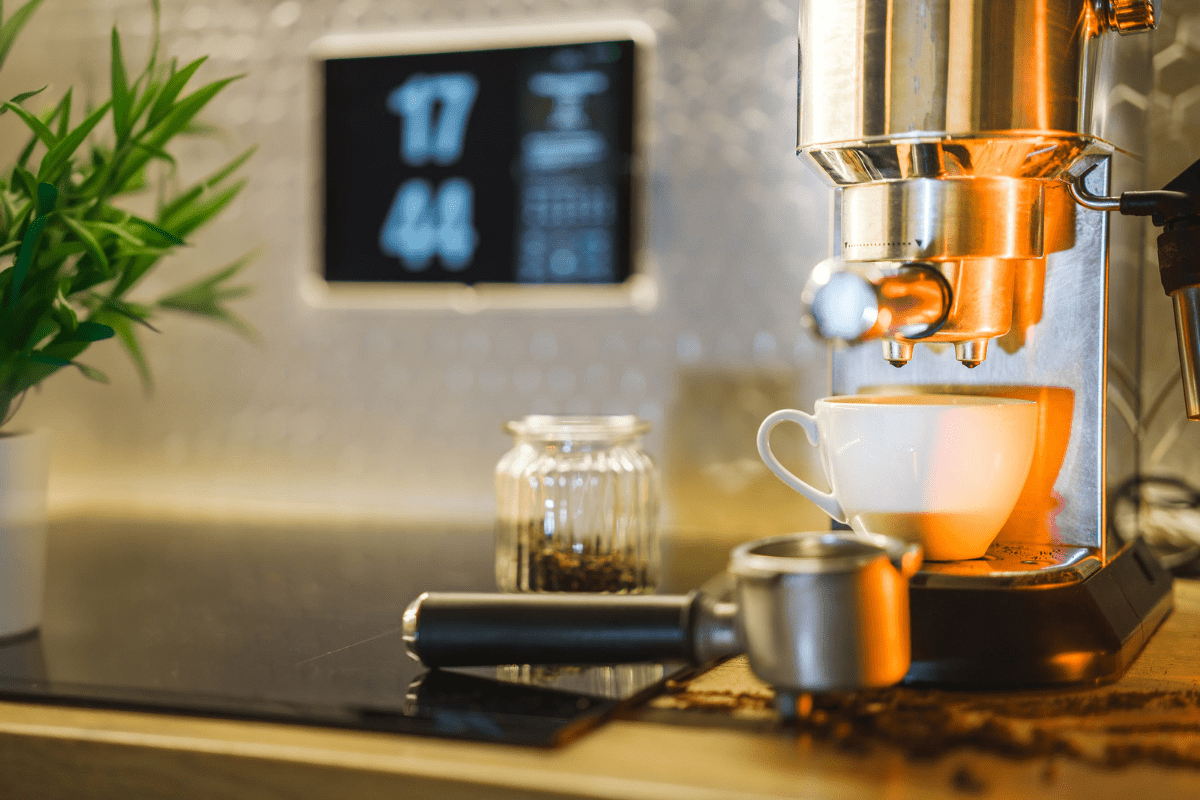
Walk into any coffee equipment store — or scroll through options online for five minutes — and you'll quickly realize the choices are overwhelming. Semi-automatic. Fully automatic. Manual lever. Pod machines. Prices ranging from $50 to $5,000. This guide cuts through all of it.
By the end, you'll know exactly which type of home espresso machine fits your lifestyle, your skill level, and your budget — and you'll be able to make a confident decision without second-guessing yourself.
What Makes Espresso Different from Regular Coffee
Before choosing a machine, it helps to understand what espresso actually is. Espresso is brewed by forcing hot water at high pressure — typically 9 bars — through finely ground, tightly packed coffee. The result is a small, concentrated shot with a layer of golden crema on top.
That pressure requirement is what makes espresso machines different from drip brewers or pour-over setups. You need a machine specifically built to generate and control that pressure — which is why you can't use just any coffee maker to pull an espresso shot.
The 4 Types of Home Espresso Machines
Every home espresso machine falls into one of four categories. Understanding the difference is the most important step in choosing the right one.
1. Manual (Lever) Espresso Machines
Manual machines require you to physically pull a lever to generate pressure. They offer the most control over your shot but have the steepest learning curve of any category. Best suited for experienced home baristas who want full creative control and enjoy the process as much as the result.
Best for: Experienced home baristas who want hands-on control
Budget range: $200–$800+
Skill level: Advanced
2. Semi-Automatic Espresso Machines
Semi-automatic machines are the most popular category for home use — and the sweet spot for most buyers. The machine controls water temperature and pressure; you control the grind, dose, and brew time. This gives you enough control to improve your technique over time without being overwhelmed on day one.
Most serious home setups are built around a semi-automatic machine paired with a quality burr grinder.
Best for: Home baristas who want to learn and improve
Budget range: $150–$1,500
Skill level: Beginner to intermediate
3. Fully Automatic Espresso Machines
Fully automatic machines handle everything — grinding, dosing, tamping, and brewing — at the push of a button. They're consistent, convenient, and require almost no technique. The tradeoff is less control and a higher price point for quality models.
Best for: Busy households who want quality with minimal effort
Budget range: $300–$2,000+
Skill level: None
4. Pod / Capsule Machines
Pod machines use pre-portioned coffee capsules, making them the simplest option available. They deliver consistent results with zero technique required. The ongoing cost of pods adds up over time, but for convenience-first buyers the tradeoff is straightforward.
Best for: Convenience-first buyers, small kitchens, office use
Budget range: $100–$300
Skill level: None
Budget Tiers: What to Expect at Each Price Point
Entry Level
Under $150Entry-level machines can produce a decent shot, but pressure consistency and temperature stability are limited. Fine for casual use or testing whether you'll actually commit to home espresso before investing more.
Best Value for Most Buyers
$150 – $350The sweet spot for first-time buyers. Capable semi-automatic machines with 15-bar pumps, built-in steam wands, and enough reliability for daily use. This is where most home baristas start — and stay for years.
Serious Home Barista
$350 – $700Meaningful step up in temperature stability, build quality, and shot consistency. At this range you're getting machines that dedicated home baristas use daily — better boilers, more precise pressure control, and significantly longer lifespans.
Prosumer
$700 and aboveProfessional-grade home machines. PID temperature controllers, dual boilers, E61 group heads. For buyers who are deeply invested in the craft and want the highest performance available for home use.
Key Features to Look For
Pump Pressure
Look for machines rated at 9 bars of operating pressure — that's the standard for espresso extraction. Many budget machines advertise 15 or 20 bars, which refers to maximum pump capacity, not extraction pressure. What matters is whether the machine can maintain consistent 9-bar pressure during the shot.
Boiler Type
Thermoblock boilers heat water quickly and are common in entry-level machines. Single boilers are reliable but require you to wait between brewing and steaming. Heat exchange and dual boiler systems allow simultaneous brewing and steaming — important if you're making milk drinks frequently.
Steam Wand
If you drink lattes or cappuccinos, the steam wand matters. A quality steam wand lets you texture milk properly — creating smooth microfoam that elevates every milk-based drink. Pannarello-style wands are easier for beginners but limit your technique ceiling over time.
Portafilter Size
A 58mm commercial-size portafilter is the industry standard. Machines with 58mm portafilters give you access to a wide range of aftermarket baskets and accessories. Smaller sizes (51mm, 54mm) are fine but more limiting long-term.
Build Quality
Stainless steel and brass components hold temperature better and last longer than plastic. If you're buying a machine for daily use over several years, build quality is worth factoring into the decision.
Do You Need a Separate Grinder?
Yes — if quality matters to you. Espresso is one of the most grind-sensitive brewing methods in coffee. Too coarse and the shot runs fast and tastes sour. Too fine and it chokes the machine and tastes bitter. Pre-ground coffee is inconsistent and goes stale quickly.
For most home setups, a quality burr grinder in the $50–$150 range pairs well with an entry to mid-range espresso machine. A manual burr grinder like the TIMEMORE Chestnut C5 is a strong starting point — precise, compact, and built to last.
Browse Grinders at Altohaus →Which Machine Is Right for You?
Buy a semi-automatic if: You want to learn how to make real espresso, enjoy the process of dialing in a shot, and are willing to spend a few minutes on your coffee in the morning.
Buy a fully automatic if: You want consistent quality at the push of a button, have a household with different coffee preferences, or simply don't want to think about technique.
Buy a pod machine if: Counter space is limited and convenience is the top priority.
Skip the under-$100 machines: They rarely produce true espresso pressure and tend to disappoint buyers expecting genuine results. The step up to $150–$200 is worth it every time.
Buying the machine first. Your espresso machine is only as good as what feeds it. Start with a quality burr grinder — then choose your machine. The grinder is the investment that pays off across your entire setup.
Frequently Asked Questions
What is the best home espresso machine for beginners?
For most beginners, a semi-automatic espresso machine in the $150–$350 range is the best starting point. It gives you enough control to learn proper technique without overwhelming complexity. Pair it with a quality burr grinder for noticeably better results from day one.
Do I need a grinder if I buy an espresso machine?
Yes, if quality matters to you. Espresso requires a consistent, precise grind that pre-ground coffee can't reliably provide. A dedicated burr grinder — even a manual one — makes a significant difference in shot quality and is the single highest-value upgrade in any home espresso setup.
What's the difference between semi-automatic and fully automatic espresso machines?
Semi-automatic machines give you control over grind, dose, and brew time while the machine handles pressure and temperature. Fully automatic machines handle the entire process at the push of a button. Semi-automatic machines have a learning curve but allow you to improve over time. Fully automatic machines are more convenient but offer less creative control.
How many bars of pressure does a good espresso machine need?
Espresso is extracted at 9 bars of pressure. While many machines advertise 15 or 20 bars, those figures refer to pump capacity. What matters is whether the machine can maintain consistent 9-bar pressure during extraction — that's the number that determines shot quality.
Is a $200 espresso machine worth it?
Yes — a quality machine in the $200–$350 range can produce genuinely good espresso at home. The key is pairing it with a quality burr grinder and fresh beans. The machine alone won't get you there — the full setup will.
What espresso machine does Altohaus recommend for home use?
We carry a curated selection of semi-automatic and fully automatic espresso machines across all budget levels — chosen for build quality, consistency, and long-term reliability. Browse our espresso machine collection to find the right fit for your setup.
Shop Espresso Machines
Share:
Why a Coffee Scale Changes Everything
Burr vs Blade Grinder: Which One Do You Actually Need?