

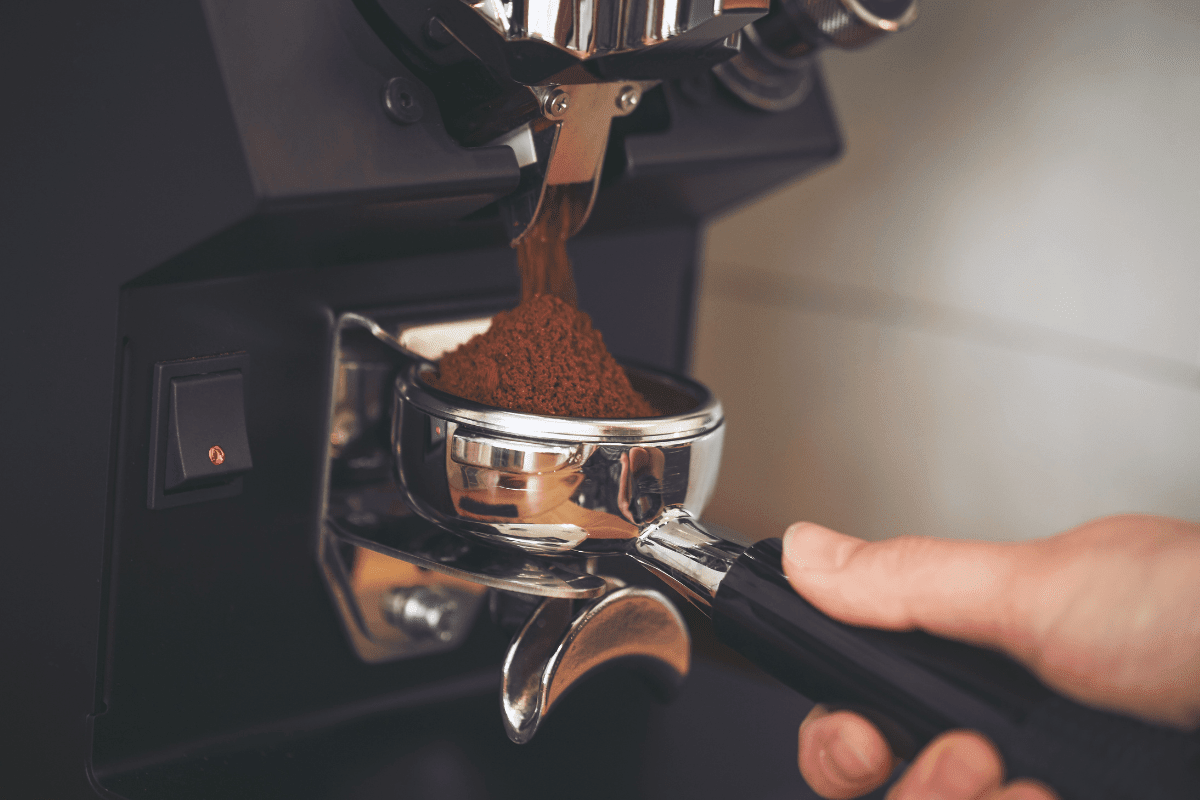
The grinder is the most overlooked piece of coffee equipment — and the one that makes the biggest difference. Here's exactly what separates a burr grinder from a blade grinder, and why it matters more than most people realize.
A mediocre grinder paired with a great espresso machine will produce mediocre espresso. A great grinder paired with a modest machine will consistently outperform that combination. The grind is that important.
And the most consequential decision you'll make when buying a grinder isn't the brand or the price — it's whether you buy a burr grinder or a blade grinder.
What Is a Blade Grinder?
A blade grinder works exactly like a blender. A spinning metal blade chops the coffee beans into smaller pieces through repeated impact. The longer you run it, the finer the result — in theory.
In practice, blade grinders produce an uneven grind. Some particles come out coarse, some come out fine, and everything in between ends up in the same batch. You have no real control over particle size, and no two batches will be consistent.
Blade grinders are inexpensive — typically $15–$30 — and widely available. For basic drip coffee where precision matters less, they're passable. For espresso, they're a significant liability.
The Problem With Uneven Grind
When water passes through coffee grounds during brewing, it extracts flavor at different rates depending on particle size. Fine particles over-extract quickly, producing bitter and harsh flavors. Coarse particles under-extract, producing sour and weak flavors — all in the same shot. The result is a muddy, inconsistent cup that no amount of technique can fix.
What Is a Burr Grinder?
A burr grinder uses two abrasive surfaces — called burrs — set at a precise distance apart. Coffee beans pass between the burrs and are ground to a consistent, uniform size determined by the gap between them. Adjust the gap and you adjust the grind size. Every particle comes out approximately the same size.
That consistency is everything in espresso. When all your particles are the same size, water extracts them evenly — which means predictable, repeatable, balanced flavor in every shot.
Flat Burrs vs Conical Burrs
Flat burr grinders use two parallel ring-shaped burrs facing each other. They tend to produce a very uniform grind and are common in commercial and high-end home grinders.
Conical burr grinders use a cone-shaped burr inside a ring burr. They're more common in home grinders, run quieter, retain less coffee between uses, and are generally more affordable.
For most home baristas, conical burr grinders offer the best balance of performance, price, and practicality. Both produce dramatically better results than any blade grinder.
Burr vs Blade: Side-by-Side
Blade Grinder
- Uneven, inconsistent particle size
- No grind size control
- High heat — degrades aroma
- Not suitable for espresso
- $15–$30
- Loud
Burr Grinder
- Uniform, consistent particle size
- Precise stepped or stepless adjustment
- Low heat — preserves freshness
- Highly recommended for espresso
- $40–$300+
- Manual options near-silent
Manual Burr Grinders vs Electric Burr Grinders
Once you've decided on a burr grinder, the next decision is manual vs electric.
Manual Burr Grinders
Manual grinders require you to crank the handle yourself. They're compact, quiet, and often deliver exceptional grind quality at a fraction of the price of a comparable electric model. The TIMEMORE Chestnut C5 is a strong example — precise, well-built, and capable of producing espresso-quality grinds for under $80.
The downside is time. Grinding enough for one or two espresso shots by hand takes 60–90 seconds. For some people that's part of the morning. For others, it's a dealbreaker.
Electric Burr Grinders
Electric grinders do the work for you in seconds. Quality entry-level electric burr grinders start around $60–$100 and are a significant upgrade from any blade grinder. At the $150–$300 range, you're getting grinders that serious home baristas use daily.
For espresso specifically, look for electric grinders with stepless grind adjustment — this allows micro-adjustments to your grind size, which is critical for dialing in shots accurately.
Why Grind Quality Matters More for Espresso
Espresso is the most grind-sensitive brewing method in coffee. Here's why:
- Espresso uses a very fine grind — any inconsistency is amplified
- High pressure extraction accelerates both over- and under-extraction in uneven grinds
- Shots take 25–35 seconds — there's no room for inconsistency to average out
- Small grind adjustments — fractions of a millimeter — dramatically change the taste of the shot
Which Grinder Should You Buy?
Just starting out: A manual burr grinder in the $60–$90 range is the best value in coffee equipment. Compact, precise, and genuinely capable of producing espresso-quality grinds. The TIMEMORE Chestnut C5 is a benchmark at this price point.
Want electric under $150: Look for an electric burr grinder with at least 30mm burrs, stepped grind adjustment, and a hopper capacity of at least 50g. Avoid anything that resembles a blade grinder with burrs added on — true burr geometry matters.
Serious about espresso: Budget $150–$300 for a dedicated espresso grinder with stepless adjustment, 38mm+ burrs, and low grind retention. This is the range where grinders stop being a limitation and start being an asset.
Pair your grinder with a coffee scale with timer and you'll have the two most impactful pieces of gear in any home espresso setup — both for under $150 combined.
Frequently Asked Questions
Is a burr grinder really better than a blade grinder?
Yes — for any serious coffee brewing, and especially for espresso. Burr grinders produce a consistent, uniform grind that extracts evenly and delivers balanced, repeatable flavor. Blade grinders chop inconsistently, leading to bitter and sour flavors in the same cup. The difference is noticeable from the first use.
Can I use a blade grinder for espresso?
Technically yes, but the results will be inconsistent. Espresso is highly sensitive to grind uniformity. A blade grinder's uneven output makes it very difficult to pull a balanced shot, and you'll struggle to repeat good results even when you get them. A burr grinder is strongly recommended for espresso.
What is the best budget burr grinder for espresso?
The TIMEMORE Chestnut C5 manual burr grinder is one of the best values in coffee equipment under $80. For electric options under $150, look for grinders with conical burrs, stepped adjustment, and low grind retention. Browse our grinder collection for curated options at every budget.
What's the difference between flat burr and conical burr grinders?
Flat burr grinders use two parallel ring-shaped burrs and tend to produce very uniform particle sizes, making them popular in commercial settings. Conical burr grinders use a cone inside a ring — they run quieter, retain less coffee, and are generally more affordable. Both significantly outperform blade grinders.
How fine should I grind for espresso?
Espresso requires a very fine grind — finer than drip coffee, closer to powdered sugar than table salt. The right setting depends on your specific grinder and machine. A properly ground espresso should produce a shot in 25–35 seconds. Start fine, then adjust coarser if the shot runs too slow, or finer if it runs too fast.
Do I need a separate grinder if my espresso machine has one built in?
If your espresso machine has a built-in grinder (a super-automatic machine), a separate grinder isn't necessary. For semi-automatic espresso machines, which don't include a grinder, a dedicated burr grinder is essential for quality results.
Shop Burr Grinders
Share:
How to Choose Your First Home Espresso Machine (2026 Guide)
The Beginner's Guide to Pour-Over Coffee (Everything You Need to Know)