

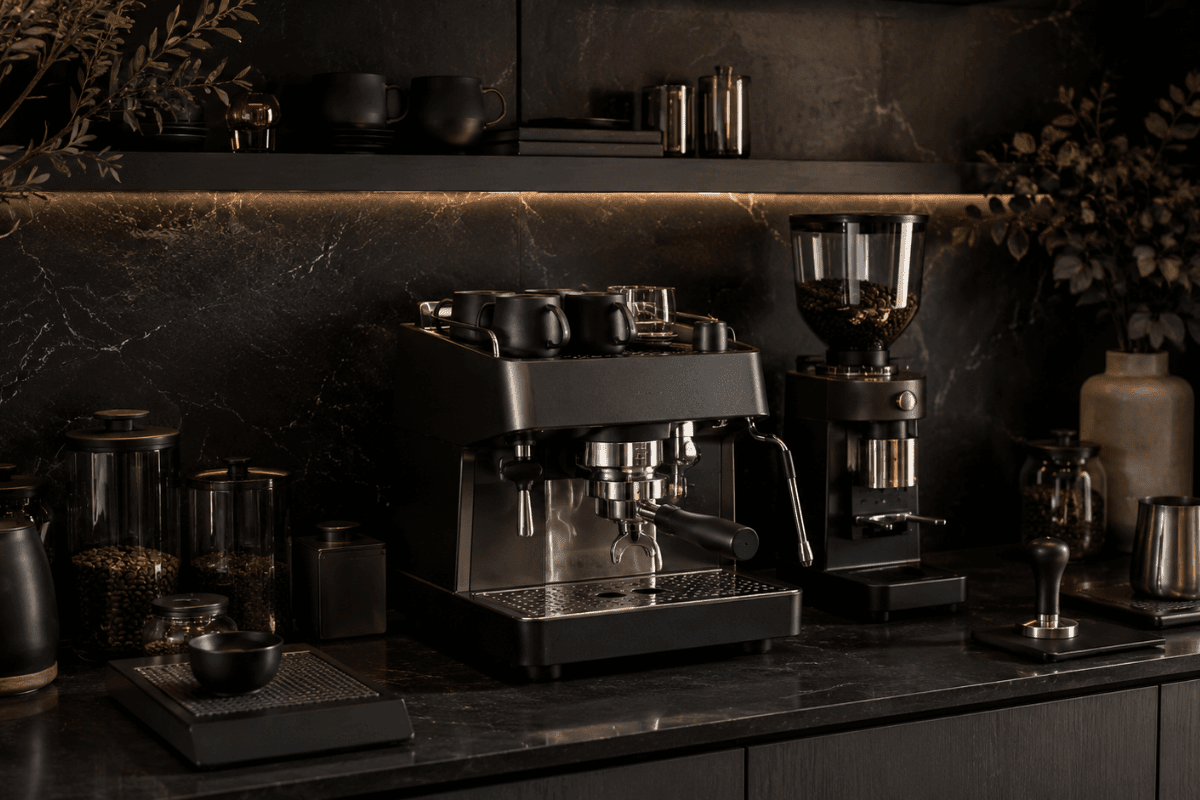
A home coffee station isn't just a corner of your kitchen. Done right, it becomes the most-used spot in your home — a small, considered space that makes every morning feel like it was designed for you. And you don't need to spend a fortune to build one worth being proud of.
Whether you're starting from scratch with $100 or upgrading to a serious setup, the approach is the same: buy in the right order, choose gear that works together, and build toward something you'll use every single day.
The Order of Operations
Most people buy a machine first. That's the wrong move. Your espresso machine is only as good as what feeds it — and what feeds it is fresh beans and a quality grinder. Buy in this order and you'll get more out of every dollar you spend:
Grinder → Brewer or Espresso Machine → Kettle → Scale → Accessories & drinkware. Each layer improves what came before it.
Setup by Budget
The Starter Station
Under $150- Manual burr grinder — TIMEMORE Chestnut C5
- Ceramic pour-over dripper — LilyDrip or Sakura
- Paper filters
- A simple kettle (any stovetop model works here)
- One great bag of fresh beans
The Enthusiast Station
$300 – $500- Manual or electric burr grinder — TIMEMORE C5 or Sculptor
- Gooseneck electric kettle — TIMEMORE Fish03
- Pour-over dripper or entry espresso machine
- Coffee scale with timer — TIMEMORE Black Mirror
- Tamper, portafilter, and shot glasses if going espresso
The Full Home Setup
$600 and up- Semi-automatic espresso machine — VEVOR or Swan Nordic
- Electric precision grinder — TIMEMORE Sculptor series
- Gooseneck kettle with temperature control
- Precision scale with timer
- Milk frother or steam wand
- Quality tamper, drinkware, and a dedicated surface
The Space Itself
Your coffee station works best when everything has a permanent home. Dedicate a section of counter space — even 18 inches is enough to start. Keep your grinder and machine within arm's reach of each other. Store beans in an airtight container away from direct sunlight. Keep your tools visible, not buried in a drawer.
A small tray or cutting board under your equipment defines the space visually and makes the whole thing feel considered — even with minimal gear. Dark wood, matte black, or warm ceramic tones all pair well with the espresso-and-cream aesthetic that makes a coffee station feel like it belongs in the room.
What to Add Over Time
A great coffee station grows with you. Once your core setup is dialed in, the next additions that make the biggest difference are a precision kettle (if you don't have one), a dedicated tamper mat, and quality drinkware that makes the experience feel complete.
Small upgrades, made with intention over time, compound into something genuinely exceptional. You won't get there all at once — and you don't need to. The point is to start.
If you can only upgrade one thing at a time, upgrade the grinder. A quality grinder improves every brew method — espresso, pour-over, French press, everything. It's the one piece of gear that pays dividends across your entire setup.
Start Simple. Build From There.
You don't need to build the full setup on day one. Start with a grinder and a brewer, get comfortable with the process, and add from there. The best coffee stations aren't bought all at once — they're assembled over time by someone who knows what they want.
Build it once. Build it right. Then enjoy it every day.
Shop the Collection
Share:
Manual vs Electric Coffee Grinder
Why a Coffee Scale Changes Everything