

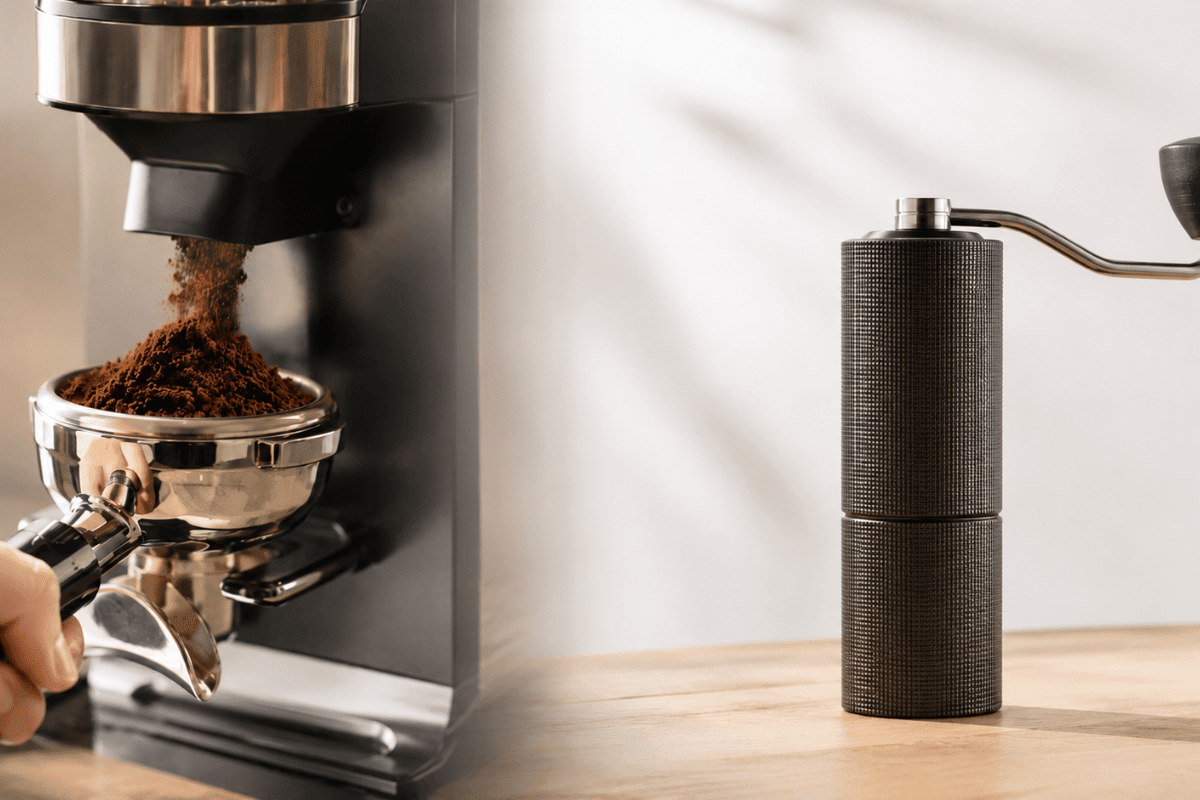
If you're still using pre-ground coffee, a grinder is the single best upgrade you can make. Fresh-ground beans extract more evenly, taste cleaner, and stay aromatic far longer than anything that comes pre-ground. The question is: manual or electric?
Both types use burrs to grind coffee consistently — and both will dramatically improve your cup. The difference comes down to your lifestyle, your brewing method, and what you actually value in a morning.
Here's an honest breakdown of both so you can choose without overthinking it.
What a Manual Grinder Gets Right
Manual grinders have had a serious renaissance over the last five years — and for good reason. Modern manual burr grinders produce grind quality that rivals electric grinders at two or three times the price point.
The TIMEMORE Chestnut series is the clearest example of this. A $70–100 manual grinder from TIMEMORE produces more consistent particle size than most electric grinders under $200. That consistency directly improves extraction, which means a noticeably better-tasting cup.
Manual — Best For
- Travel and portability
- Quiet grinding
- Maximum quality per dollar
- Pour-over and filter coffee
- Anyone who enjoys the process
Electric — Best For
- Grinding multiple cups at once
- Busy mornings, minimal effort
- Espresso dialing-in
- Households with multiple coffee drinkers
- Consistency at speed
The Case for Going Manual
Beyond grind quality, manual grinders have practical advantages that are easy to overlook. They require no electricity — which makes them ideal for travel, camping, or offices without counter space. They're nearly silent, which matters if you're grinding before the rest of your household is awake. And they're easier to clean and maintain than their electric counterparts.
Grinding by hand takes 45–90 seconds. For many home baristas, that minute of focused effort is part of what makes the first cup of the day feel earned. It's a small act that puts you in control of the process from the start.
When Electric Makes More Sense
If you're making espresso at home, an electric grinder gives you a meaningful advantage. Espresso requires extremely fine, consistent grinds — and dialing in espresso means making micro-adjustments repeatedly until you find the sweet spot. Electric grinders with stepped or stepless adjustment make that process faster and more repeatable.
Electric grinders are also the obvious choice if you're grinding for multiple people or brewing larger volumes. A manual grinder producing 30g for a double pour-over takes about 90 seconds. Producing 60g takes three minutes. At that volume, electric starts to make more sense.
The TIMEMORE Sculptor series sits at the intersection of both worlds — an electric grinder with the precision burr quality that TIMEMORE is known for across their manual lineup.
The One Thing Both Have in Common
Whether you go manual or electric, the most important thing is that you're using a burr grinder — not a blade grinder. Blade grinders chop coffee randomly, producing a mix of fine dust and coarse chunks that extract unevenly and produce flat, inconsistent results no matter how good your beans are.
If you brew pour-over or filter coffee and want the best quality per dollar — go manual. If you pull espresso daily or share your setup with others — go electric. Either way, fresh-ground beats pre-ground every single morning.
Where to Start
If you're new to grinding, the TIMEMORE Chestnut C5 is one of the most recommended entry points in the specialty coffee world — precise, durable, and priced accessibly. If you're ready to go electric, the TIMEMORE Sculptor series delivers café-level consistency for a home setup.
The grinder you choose today will outlast your first espresso machine. Choose something you'll grow into, not just grow out of.
Shop Burr Grinders
Share:
How to Make Perfect Espresso at Home
How to Build Your Home Coffee Station