

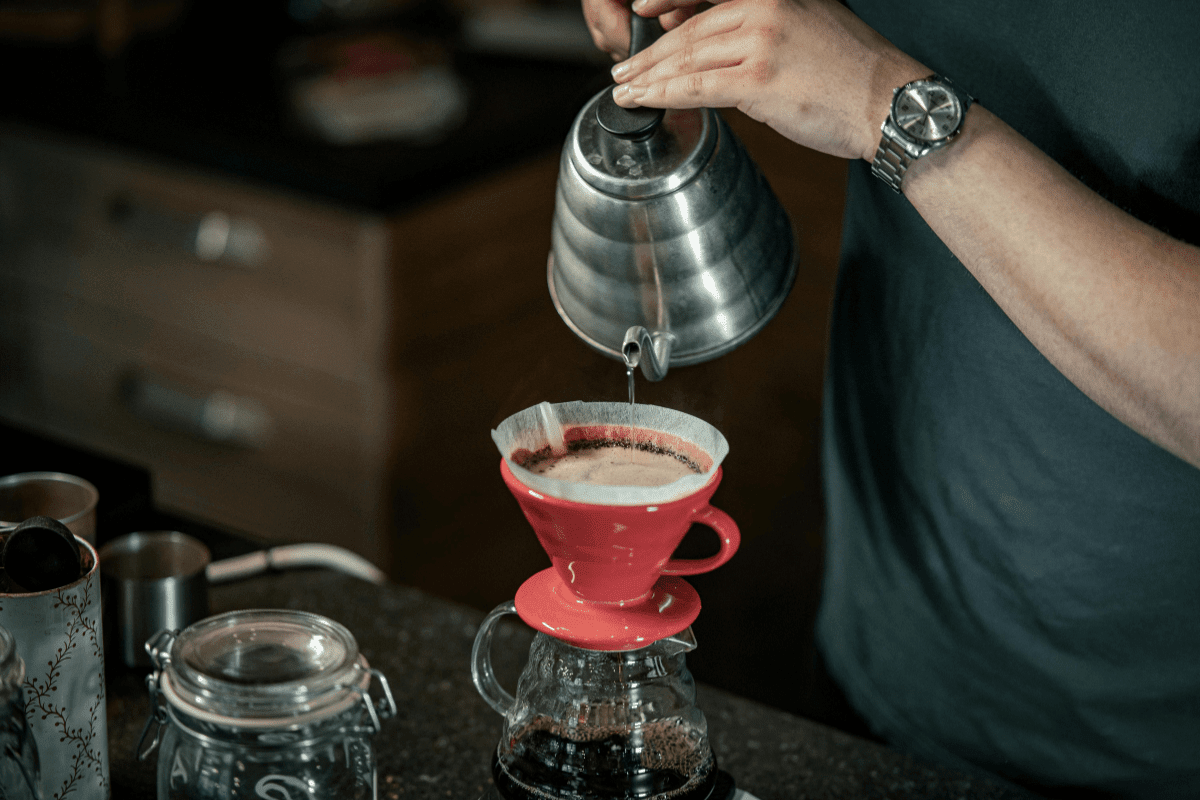
Pour-over coffee has a reputation for being complicated. It isn't. At its core, pour-over is one of the simplest brew methods available — hot water poured over ground coffee in a filter. No machine required. No pressure. No buttons.
What pour-over does require is a little attention. The reward is a cup of coffee that's cleaner, brighter, and more flavorful than what most people have ever made at home. This guide covers everything you need to get started — equipment, technique, and the small details that make a real difference.
What Is Pour-Over Coffee?
Pour-over is a manual brewing method where hot water is poured over coffee grounds held in a filter above a cup or carafe. As the water flows through the grounds and filter, it extracts flavor compounds and drips into the vessel below.
Unlike automatic drip machines, pour-over gives you direct control over every variable: water temperature, pour rate, pour pattern, and brew time. That control is what allows pour-over to produce such a clean, nuanced cup — individual flavor notes come through clearly rather than being muted by plastic components or masked by pressure.
What You Need to Get Started
1. A Pour-Over Dripper
The dripper holds the filter and grounds above your cup or carafe. The most popular options for beginners are the Hario V60, the Chemex, and flat-bottom drippers like the Kalita Wave. Each produces a slightly different cup profile, but all are beginner-friendly.
- Hario V60 — cone-shaped with spiral ribs, produces a bright and clean cup. Slightly more technique-sensitive but very rewarding.
- Chemex — iconic hourglass design with a thicker filter. Produces an exceptionally clean, smooth cup. Great for larger batches.
- Kalita Wave — flat-bottom dripper with three small holes. More forgiving than the V60 and produces a balanced, consistent cup.
For most beginners, a flat-bottom dripper or the Kalita Wave is the easiest starting point.
Browse Pour-Over Drippers →2. A Gooseneck Kettle
A gooseneck kettle — with its long, narrow curved spout — gives you precise control over your pour rate and pattern. This matters more than most beginners expect. Pouring too fast or unevenly leads to inconsistent extraction and a flat-tasting cup.
An electric gooseneck kettle with temperature control is ideal — it lets you heat water to an exact temperature and hold it there. The TIMEMORE Fish series is a strong option for home use: precise, well-built, and well-priced.
Browse Kettles →3. A Burr Grinder
Fresh-ground coffee makes a significant difference in pour-over. The clean extraction method amplifies both good and bad qualities in the beans — which means stale or pre-ground coffee will taste noticeably worse than freshly ground. A burr grinder in the $60–$100 range is enough to dramatically improve your cup. See our guide to burr vs blade grinders for a full breakdown.
4. A Coffee Scale
Measuring by weight rather than volume produces consistent results every time. A simple digital scale accurate to 0.1g is all you need. Many pour-over brewers use a scale with a built-in timer to track both dose and brew time simultaneously.
5. Filters
Paper filters are the standard for pour-over. They produce a clean cup by removing oils and fine particles. Make sure you buy filters sized and shaped to match your specific dripper. Pre-rinse your filter with hot water before brewing — this removes any papery taste and preheats the dripper.
The Right Grind Size for Pour-Over
Pour-over uses a medium to medium-coarse grind — coarser than espresso, finer than French press. A good visual reference is coarse sea salt or rough sand.
- Too fine — water flows too slowly, over-extracts, produces a bitter cup
- Too coarse — water flows too fast, under-extracts, produces a sour or weak cup
- Just right — a 250ml cup brews in 2.5–3.5 minutes with balanced flavor
Start at medium grind and adjust from there. If the cup tastes bitter, go coarser. If it tastes sour or thin, go finer.
Water Temperature
The ideal water temperature for pour-over is 195–205°F (90–96°C) — just off a full boil. Boiling water at 212°F can scorch lighter roasts and produce a harsh cup. Water that's too cool under-extracts and produces flat, weak coffee.
If you don't have a temperature-controlled kettle, bring water to a boil and let it sit for 30–45 seconds before pouring. That typically brings it into the right range.
Coffee to Water Ratio
The standard starting ratio for pour-over is 1:15 to 1:17 — one gram of coffee for every 15–17 grams of water.
- 15g coffee : 250ml water — stronger, fuller-bodied
- 17g coffee : 250ml water — lighter, more delicate
Start at 15g:250ml and adjust to taste. These ratios are starting points, not rules. Your preferred coffee, roast level, and grind will all affect where you land.
How to Brew Pour-Over: Step by Step
Boil your water
Heat to 195–205°F. If using a temperature-controlled kettle, set it and let it hold. If not, boil and wait 30–45 seconds.
Grind your coffee
Grind fresh to a medium consistency. Dose 15g for a 250ml cup.
Rinse your filter
Pour hot water through the filter before adding grounds. This removes papery taste and preheats the dripper. Discard the rinse water.
Add grounds and bloom
Add your grounds to the filter and level gently. Pour 2x the weight of your coffee in water (30g for a 15g dose) in a slow circular motion. Wait 30–45 seconds. This releases CO2 from fresh beans and prepares them for even extraction.
Continue pouring
Pour in slow, steady circles, keeping the water level consistent. Pour in stages if needed — don't rush. Let each pour drain partially before adding more.
Finish and check your time
Total brew time should be 2.5–3.5 minutes. If it's faster, grind finer next time. If it's slower, grind coarser.
Taste and adjust
Every variable affects the cup. Small adjustments — grind, ratio, temperature, pour rate — will get you to your ideal result quickly. Take notes if it helps.
Common Pour-Over Mistakes
Skipping the bloom
The bloom releases trapped CO2 from fresh coffee. Skipping it means uneven extraction — the gas creates channels in the grounds that water flows through inconsistently. Always bloom, even if it feels unnecessary.
Pouring too fast
Dumping water in quickly disturbs the grounds and causes uneven extraction. Use a gooseneck kettle and pour in slow, controlled circles. The patience you put in here shows directly in the cup.
Wrong water temperature
Boiling water scorches lighter roasts. Water that's too cool under-extracts. Stay in the 195–205°F range. A temperature-controlled kettle removes this variable entirely.
Pre-ground or stale coffee
Pour-over is a transparent brew method — it reveals the quality of your coffee clearly. Stale beans or pre-ground coffee will produce a noticeably flat cup. Grind fresh and buy beans with a roast date within the last three weeks.
If you're only going to change one thing about your pour-over, grind fresh. The difference between day-old ground coffee and beans ground right before brewing is immediately noticeable — especially with this brew method.
Frequently Asked Questions
Is pour-over worth the extra effort compared to drip coffee?
Pour-over gives you direct control over every variable — water temperature, pour rate, and brew time. That control, when used well, produces a cleaner and more flavorful cup than most automatic drip machines. Whether the process is worth it depends on how much you enjoy it and how much the result matters to you.
How long does it take to brew pour-over coffee?
A single cup takes approximately 3–4 minutes from start to finish, including the bloom. Total hands-on time is about the same — you're pouring for most of it. The process becomes quick and intuitive after a few brews.
What is the best pour-over dripper for beginners?
For most beginners, a flat-bottom dripper or the Kalita Wave is the easiest starting point. They're more forgiving of technique variations than a cone-shaped dripper like the Hario V60. Any quality dripper will produce excellent results once you've dialed in your technique.
Do I need a gooseneck kettle for pour-over?
Technically no, but practically yes. A standard kettle makes it very difficult to control your pour rate and pattern, which significantly affects extraction quality. A gooseneck kettle is one of the highest-value upgrades in any pour-over setup.
What grind size should I use for pour-over?
Medium to medium-coarse — similar to coarse sea salt. Too fine and the brew runs slow and bitter. Too coarse and it runs fast and sour. A total brew time of 2.5–3.5 minutes is a good indicator that your grind is in the right range.
How much coffee do I use for pour-over?
A 1:15 ratio is a solid starting point — 15 grams of coffee to 250ml of water for a single cup. Adjust to taste. Weighing your coffee and water produces more consistent results than using volume measurements.
Shop Pour-Over Brewers
Share:
Burr vs Blade Grinder: Which One Do You Actually Need?
How to Dial In Your Espresso at Home